Aligning Wager Sequences with Seasonal Shifts in Major Sports Leagues
Carlo Jung · Aug 21, 2026
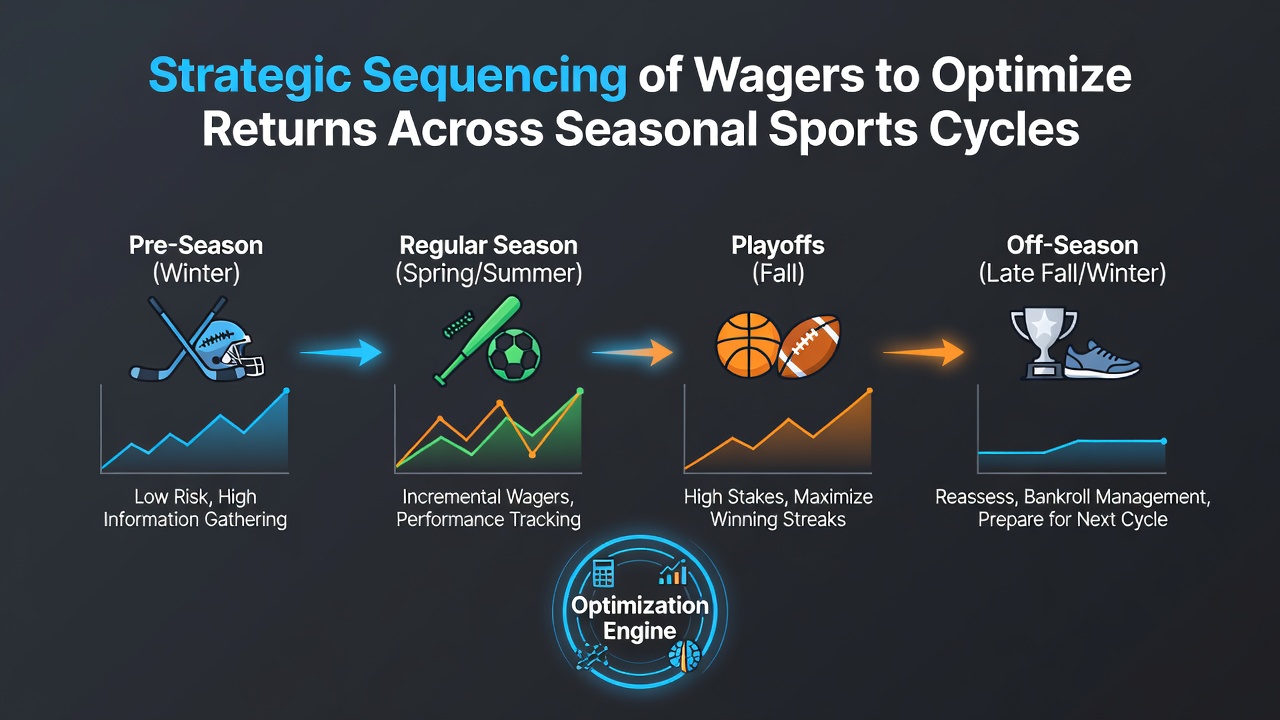
Aligning Wager Sequences with Seasonal Shifts in Major Sports Leagues
Seasonal sports cycles create distinct windows where certain leagues and events dominate global betting activity, and observers note that structuring wagers across these periods requires careful timing rather than isolated decisions. Data from industry reports show that major North American leagues such as the NFL and NBA operate on calendars that rarely overlap completely with European soccer seasons or Australian rules football, which allows bettors to shift focus without spreading capital too thinly at any single moment.
Mapping Overlapping Calendars
Research indicates that August 2026 marks the start of several European soccer campaigns alongside the tail end of major league baseball and the approach of early NFL preseason markets. Those who track these transitions point out that sequencing wagers means allocating portions of a bankroll to opening-week soccer fixtures while reserving capacity for American football lines that tighten closer to kickoff. Figures from the American Gaming Association reveal steady year-over-year growth in handle across these staggered periods, suggesting that market liquidity remains high when operators adjust odds to reflect shifting public interest.
Experts have observed that horse racing in the southern hemisphere reaches peak activity during the same months when northern basketball leagues prepare for training camps, which creates natural alternation points. Studies on betting volume patterns demonstrate that participants who move capital between these cycles encounter fewer simultaneous high-variance events, although the precise allocation still depends on individual risk parameters and available line movement data.
Allocation Frameworks Across Cycles
Analysts describe sequencing as a process of dividing total capital into segments tied to specific seasonal peaks rather than applying a uniform stake size throughout the year. One approach documented in academic literature involves front-loading smaller test wagers during early-season uncertainty in cricket or rugby union before increasing exposure once form indicators stabilize. Data shows that such graduated entry points reduce the impact of opening-week anomalies that often distort early odds.
Simulations conducted by university research teams indicate that rotating focus between NFL regular-season totals and NBA player-prop markets produces measurable differences in return volatility compared with maintaining static exposure across both. The same models highlight how European soccer's winter break creates a brief window where attention can shift to Australian summer sports without forcing rushed decisions during low-liquidity periods.
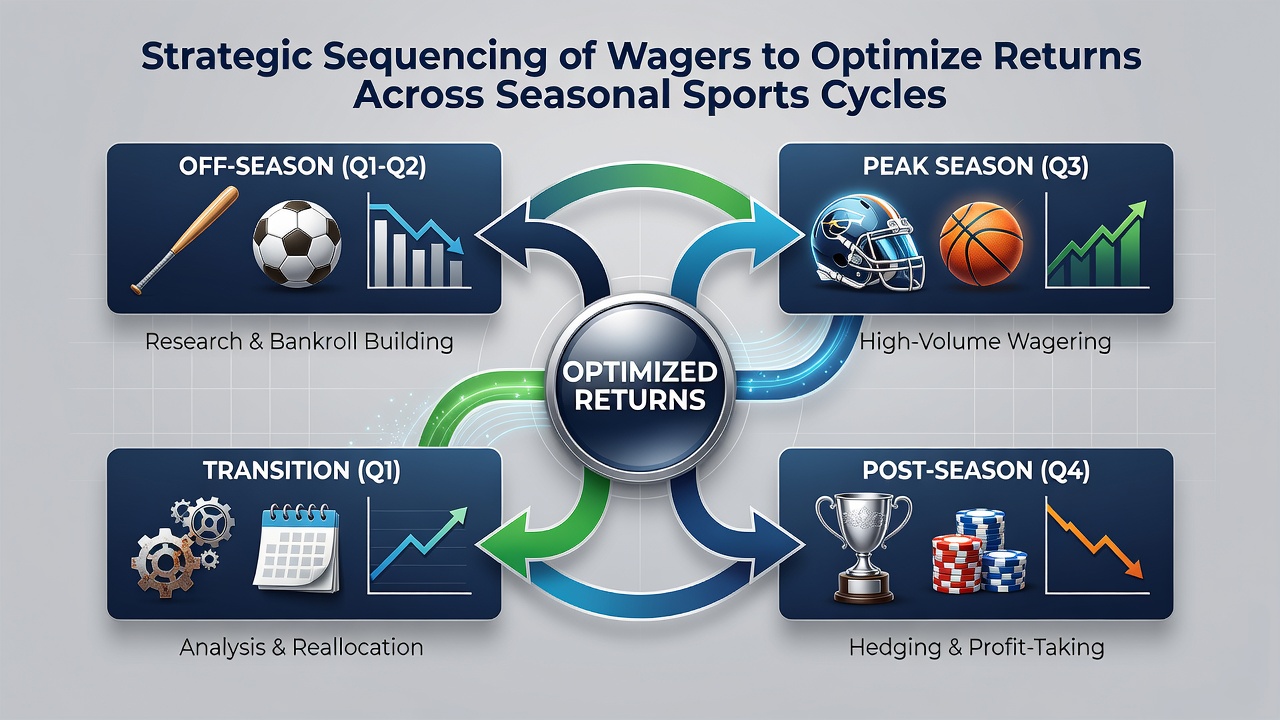
Practical Sequencing Examples
Case studies from professional betting syndicates illustrate sequences that begin with pre-season NFL futures in late summer, transition into in-play soccer markets during the autumn months, and conclude with late-season NBA totals once playoff positioning becomes clearer. Observers note that each leg of the sequence uses updated bankroll percentages derived from the outcomes of the prior segment, which prevents overcommitment when one cycle underperforms relative to expectations.
Researchers have documented similar patterns in mixed-martial-arts events that cluster around North American combat sports calendars, allowing capital to move toward those bouts while European soccer encounters midweek fixture congestion. Evidence from Canadian regulatory filings shows consistent participation spikes during these crossover periods, supporting the view that sequenced allocation aligns with measurable market activity rather than guesswork.
Monitoring Line Movement and Liquidity
Line movement data compiled across multiple operators reveals that early NFL totals often tighten faster than comparable soccer lines during overlapping weeks, which influences the order in which wagers are placed within a given sequence. Those who study these patterns emphasize the value of tracking sharp-money indicators before committing larger portions of capital to any single cycle. Academic papers on probabilistic forecasting further suggest that Monte Carlo-style simulations can test sequencing rules against historical line data without requiring real-time execution.
Industry reports from the Victorian Responsible Gambling Foundation indicate that participants who adjust wager timing according to seasonal liquidity metrics report more stable session outcomes than those who maintain fixed schedules. Such findings remain descriptive rather than prescriptive, yet they provide concrete benchmarks for evaluating sequence effectiveness over multiple cycles.
Conclusion
Strategic sequencing across seasonal sports cycles rests on observable calendar overlaps, documented liquidity shifts, and allocation methods tested through simulation and historical review. As August 2026 approaches, data from multiple regulatory and academic sources continue to track how these patterns evolve, offering ongoing reference points for those structuring wagers within multi-sport frameworks.