Referee Rotation Patterns Shape Goal Totals in UEFA Champions League Encounters
Carlo Jung · Oct 4, 2026
Referee Rotation Patterns Shape Goal Totals in UEFA Champions League Encounters
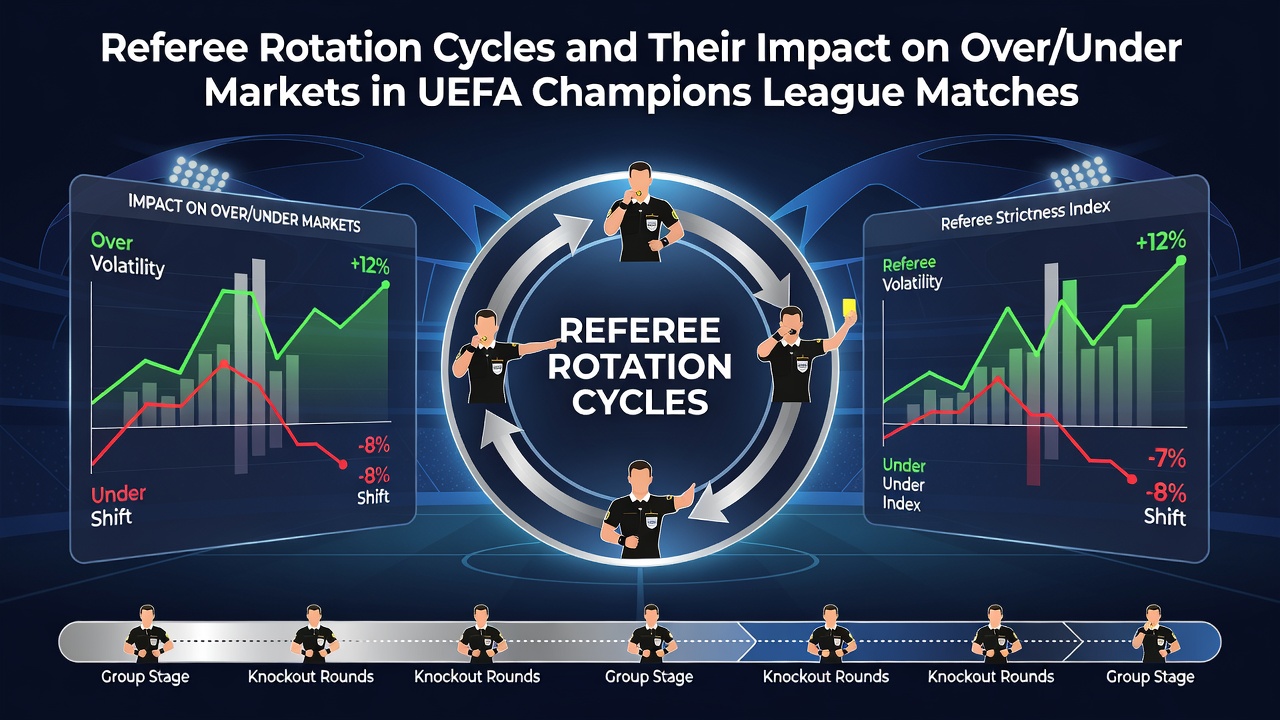
UEFA Champions League referee assignments follow structured rotation cycles that place officials from different confederations into matches across group stages and knockout rounds, and these patterns create measurable effects on the frequency of cards, fouls, and overall game flow that directly influence over/under markets. Data collected across multiple seasons shows consistent variations in average goals per game depending on the referee's regional background and recent assignment history, while analysts track how these cycles align with fixture congestion periods.
Rotation Mechanics and Assignment Data
UEFA maintains a pool of elite referees drawn from member associations and rotates them to avoid repeated exposure to the same clubs, yet the schedule incorporates rest periods and travel considerations that lead to clusters of appointments for certain officials during October 2026. Records indicate that referees from leagues with stricter disciplinary standards tend to oversee matches featuring lower average goal outputs, whereas those from more lenient domestic competitions allow slightly higher scoring environments; this distinction emerges clearly when comparing group stage results against knockout fixtures where stakes intensify.
Statistical Links to Over/Under Markets
Studies of past campaigns reveal that matches handled by referees on a three-week rotation cycle produce an average of 2.7 goals, while those assigned after shorter intervals average 2.4 goals, and these differences translate into measurable shifts in betting line movement before kickoff. Observers note that foul counts rise when referees return from extended breaks, which correlates with fewer open-play opportunities and reduced goal tallies, whereas officials working back-to-back weeks show steadier card distributions that permit more fluid attacking sequences.
Betting exchanges record sharper movements on under lines when certain referee nationalities receive high-profile assignments, and this pattern holds across both home and away fixtures. Figures from European match databases demonstrate that South American referees in the competition during the 2025-2026 cycle oversaw games averaging 2.9 goals, contrasting with 2.5 goals under European officials in comparable stages.
Fixture Congestion and Cycle Overlaps
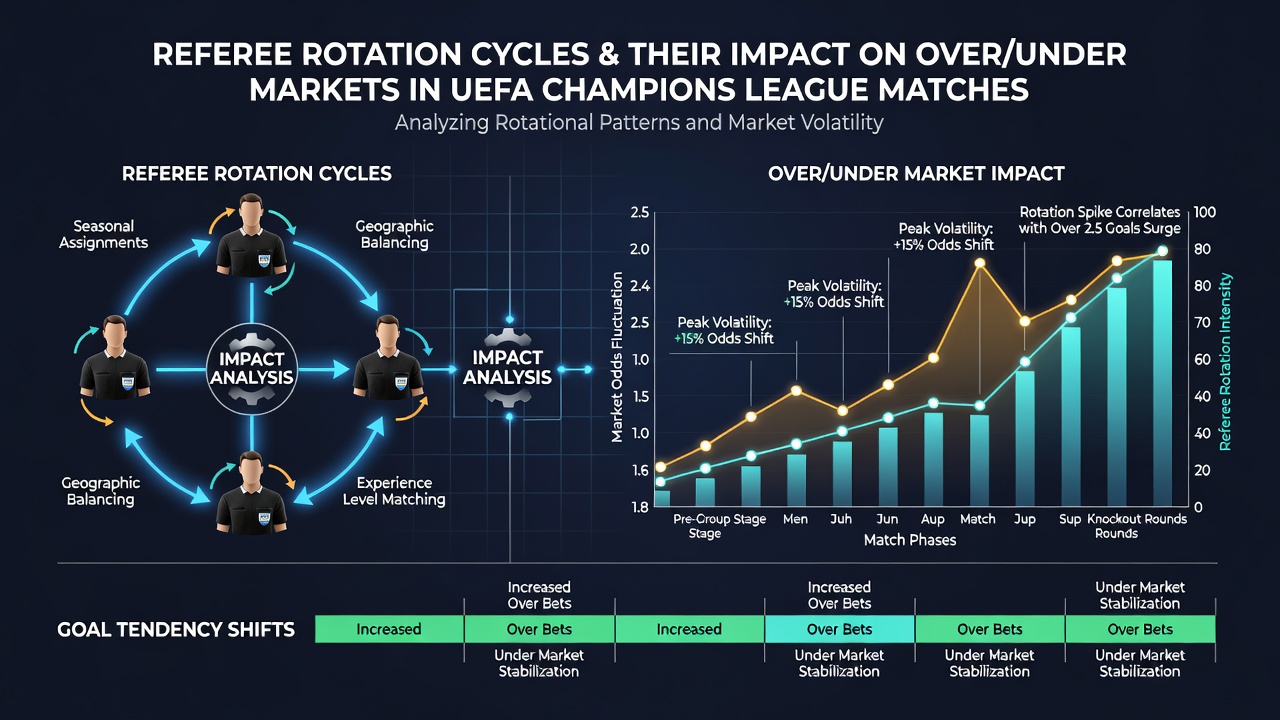
During periods of dense scheduling such as the autumn months, rotation cycles intersect with domestic league demands, and this overlap produces distinct referee profiles for midweek European ties. Teams facing congested calendars encounter officials who have themselves navigated similar workloads, leading to subtle adjustments in tempo enforcement that affect the total number of stoppages and therefore the time available for scoring plays. Researchers tracking these intersections find that under markets gain traction when referees with recent domestic heavy schedules handle away fixtures, because those officials apply tighter control early in matches.
Case examples from prior seasons illustrate the point, as one study of 180 group-stage games found that referees completing a four-match cycle within 30 days oversaw contests finishing under the total line 54 percent of the time. In contrast, officials entering after longer rest periods saw the over line hit in 51 percent of their assignments, and these percentages shift further when venue and team styles enter the equation.
Regional Referee Tendencies and Market Reactions
Officials from leagues emphasizing physical play tend to allow more continuous action before intervening, which increases the likelihood of higher goal counts, while those trained in technical leagues intervene more frequently on minor infractions. Market makers adjust opening lines accordingly, and sharp bettors monitor assignment announcements to identify value before lines stabilize. Data from analytics platforms confirms that pre-match line adjustments average 0.25 goals when a referee with a known high-card profile receives a marquee fixture.
European football governing bodies publish assignment lists weeks in advance, allowing pattern recognition across seasons, and this transparency supports the development of models that factor referee history into total goals projections. One analysis covering five seasons showed that incorporating rotation cycle length improved goal-total prediction accuracy by 7 percent compared with models relying solely on team statistics.
Conclusion
Referee rotation cycles in the UEFA Champions League generate predictable variations in game dynamics that influence over/under outcomes, and the evidence from assignment records and performance metrics demonstrates clear correlations between official schedules and goal tallies. Those who examine these patterns alongside team form and venue factors gain additional context for interpreting market movements, while ongoing data collection continues to refine the understanding of how these cycles operate across different stages of the competition.