Tracking Subtle Line Changes in Asian Handicap Markets
Mara Jung · Nov 15, 2026
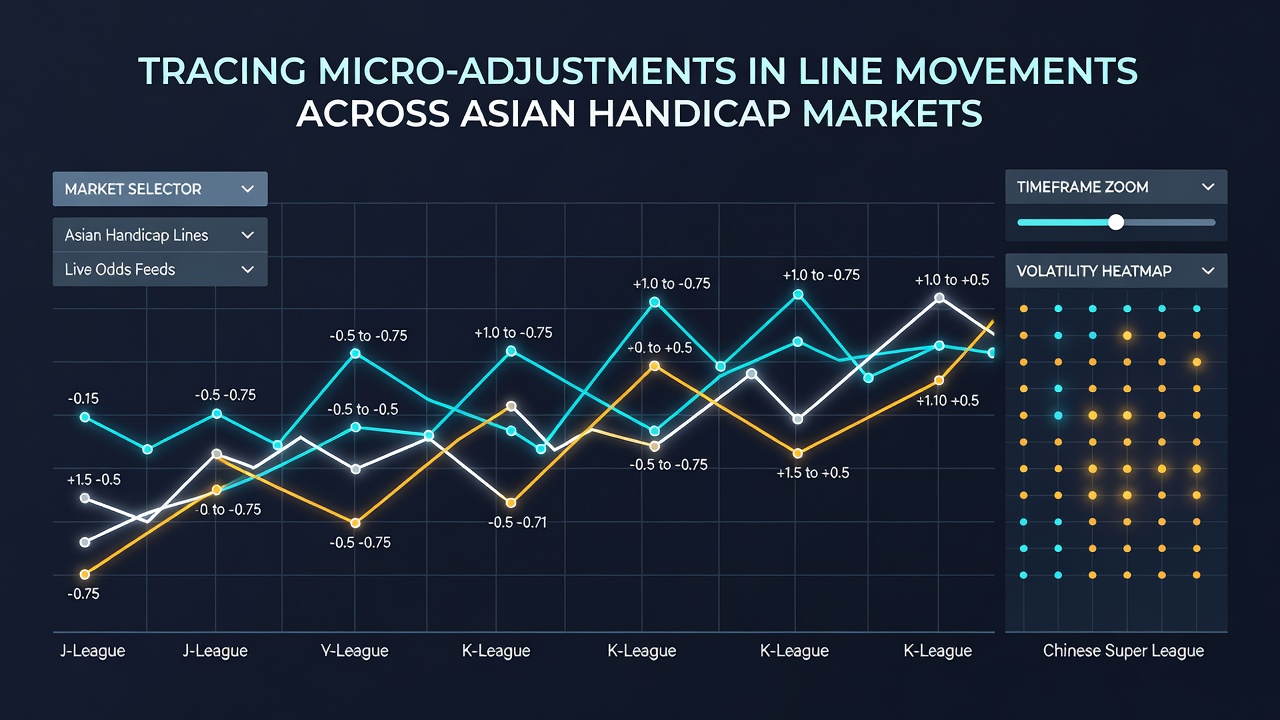
Tracking Subtle Line Changes in Asian Handicap Markets
Asian handicap markets operate through continuous line adjustments that reflect incoming bets, injury updates, and weather conditions, and observers note that these micro-adjustments often occur in increments as small as 0.05 or 0.1 of a goal. Data from major Asian bookmakers indicates that such shifts happen multiple times per hour during the lead-up to popular soccer fixtures, while the underlying mechanics remain tied to liquidity levels and sharp money movement. Researchers have documented how even minor alterations in the handicap line can signal where professional syndicates place their stakes, and analysts track these patterns across platforms in Europe, Southeast Asia, and Australia to build historical datasets.
Core Mechanics of Line Movement
Bookmakers set initial Asian handicap lines based on statistical models that incorporate team form, head-to-head records, and player availability, yet subsequent adjustments arise when betting volumes exceed expected thresholds. A line might open at -0.75 for the home side and quickly move to -0.5 if early money favors the visitors, while the corresponding odds on each outcome recalibrate within seconds. Studies from the University of Melbourne show that these micro-shifts correlate strongly with public versus sharp action ratios, and market participants who monitor timestamped data feeds capture the sequence of changes across multiple operators simultaneously.
Asian handicaps differ from traditional point spreads because they allow for half-goal and quarter-goal increments that reduce the likelihood of pushes, and this structure produces more granular movement patterns. When a line drifts from +0.25 to 0.0, it typically indicates increased confidence in the underdog, and traders record each adjustment alongside volume estimates to identify where value may still exist on the opposite side. Figures from Singapore-based exchanges reveal that the average number of line changes per match exceeds 40 during the final 48 hours before kickoff, with the largest clusters occurring after team news releases.
Tools and Data Sources for Observation
Specialized software aggregates live feeds from several Asian bookmakers and presents line histories in visual timelines, allowing users to overlay betting volumes and timestamped news events. These platforms pull data from operators in Hong Kong, Malaysia, and Indonesia, and they flag movements that exceed preset thresholds such as 0.1 goal shifts within a five-minute window. One case involved a Serie A match where the line moved from -1.0 to -0.75 after a key defender was confirmed unavailable, and the adjustment occurred across three separate books within ninety seconds.
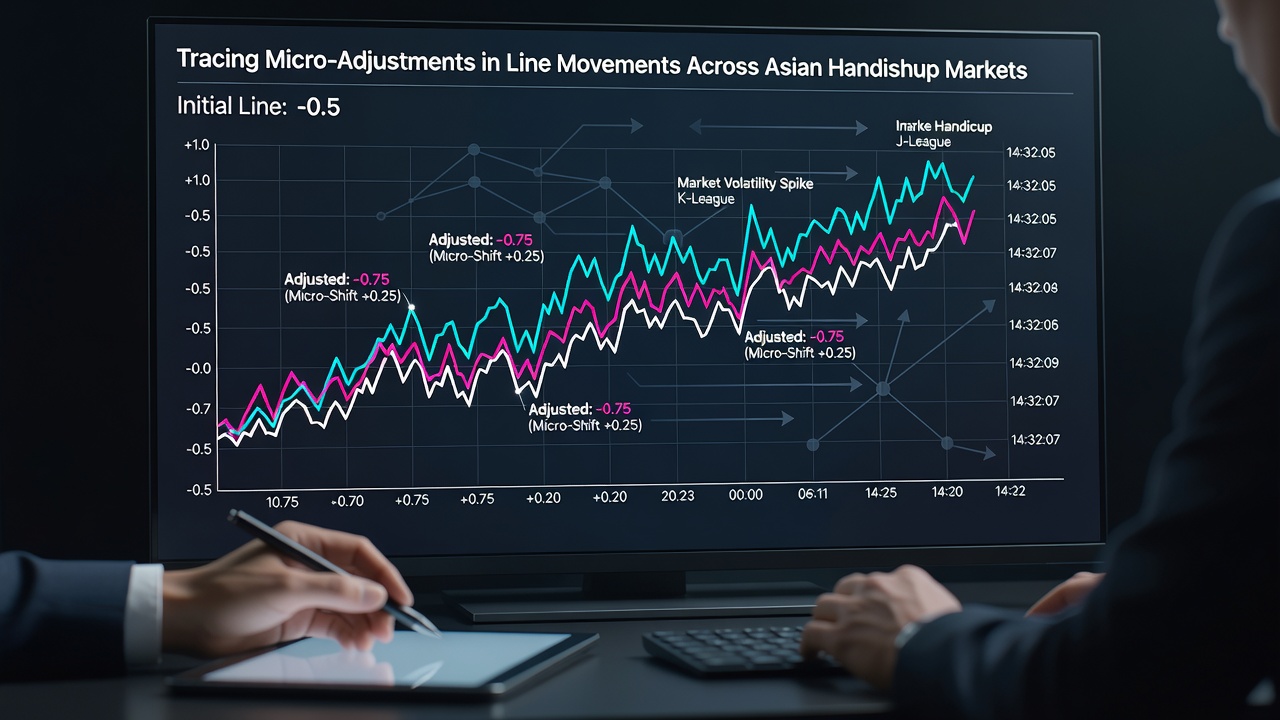
Academic papers on market efficiency examine whether these micro-adjustments fully incorporate all available information or leave temporary inefficiencies, and a 2025 report from the Canadian Institute for Gaming Research highlighted that certain lower-profile leagues exhibit slower incorporation of new data. Observers compare line histories across different time zones to isolate regional betting patterns, noting that European syndicates often act first on injury news while Asian markets respond more to early volume surges. Those who study these dynamics compile multi-source datasets that include both the handicap value and the associated odds at each point in time.
Patterns Observed in November 2026 Markets
During November 2026, tracking services recorded elevated adjustment frequency in Champions League group stage matches, with several lines shifting four or five times in the final hour before kickoff. Data collected across operators showed that when the line moved from -0.5 to -0.25 on underdog sides, the implied probability on the favorite decreased by approximately 3 percent, and sharp bettors frequently took the opposite position at the new price. These movements aligned with official team sheets released by UEFA, and analysts cross-referenced the timing against public betting percentages published by Australian wagering regulators.
Similar activity appeared in domestic leagues where travel disruptions affected squad selections, and the resulting line changes propagated across markets in under two minutes. Researchers compiled these instances into case studies that illustrate how micro-adjustments cluster around specific event types, such as late fitness test results or weather warnings. The patterns remain consistent enough that some platforms now offer alerts when cumulative movement exceeds historical averages for a given competition.
Conclusion
Tracing micro-adjustments across Asian handicap markets provides a window into the flow of information and capital within global betting ecosystems, and the methods continue to evolve alongside improved data feeds and analytical tools. Market participants who maintain detailed records of line histories gain perspective on how different operator pools respond to the same stimuli, while academic and industry research supplies broader context on efficiency and regional variations. Continued observation through 2026 and beyond will likely reveal whether these subtle movements become more or less predictable as technology and participation grow.